

Symptom-led consultation
The visit starts with what the patient is struggling with most: reading, driving, glare, dim vision, work needs, or dependence on family support.
At Eye First in Aliganj, Lucknow, cataract care starts with a detailed eye evaluation before surgery timing, lens choice, and recovery guidance are discussed.
Cataract can make vision cloudy, dull, yellowish, or uncomfortable in bright light. Many patients first notice difficulty with reading, night driving, glare, halos around lights, frequent spectacle changes, or a general feeling that vision is no longer clear even with glasses.
Eye First Superspeciality Eye Care is an eye care centre in Lucknow where cataract patients are evaluated with attention to daily visual needs, cataract severity, eye pressure, retina status, cornea health, and lens measurement requirements. The aim is to explain whether symptoms are due to cataract alone or whether another eye condition also needs attention.
The final treatment plan is made after consultation with the doctor. Patients and families receive practical guidance about surgery readiness, IOL lens options, medicines, documents to carry, expected recovery, follow-up visits, and warning signs that should not be ignored.
The visit starts with what the patient is struggling with most: reading, driving, glare, dim vision, work needs, or dependence on family support.
Cataract density, eye pressure, retina condition, cornea clarity, and lens power measurements help guide the treatment plan.
Patients are counselled about IOL choices, usual recovery, eye drops, activity precautions, and follow-up timing before the final decision.
A cataract check is useful when vision changes begin affecting daily life, even if the patient is not ready to decide about surgery on the first visit.
Cataract often causes hazy vision, reduced sharpness, dull colours, or a feeling that glasses are not helping as much as before.
Bright sunlight, headlights, halos, and low-contrast situations can become uncomfortable as cataract progresses.
Changing glasses repeatedly without stable improvement can be a sign that the natural lens is becoming cloudy.
Cataract treatment in Lucknow should be based on diagnosis, visual needs, and eye health. The evaluation helps decide whether observation, updated glasses, or surgery planning is the right next step.
The doctor checks vision, cataract type, cataract density, cornea clarity, and the front part of the eye using clinical examination.
Eye pressure checks and retina evaluation help identify other concerns that may affect surgery planning or expected visual recovery.
When surgery is being planned, measurements are taken to support IOL power selection and counselling about suitable lens options.
The best IOL lens choice can vary by eye health, lifestyle, reading needs, astigmatism, budget, and expectations. Counselling keeps the decision practical rather than confusing.
A monofocal IOL may be discussed for patients who want dependable distance or near planning with clear expectations about glasses.
Toric, multifocal, or spectacle-reducing lenses are considered only after checking eye measurements, retina status, cornea health, and suitability.
If surgery is advised, the team explains arrival timing, food or medicine instructions, eye drops, attendant guidance, and documents to carry.
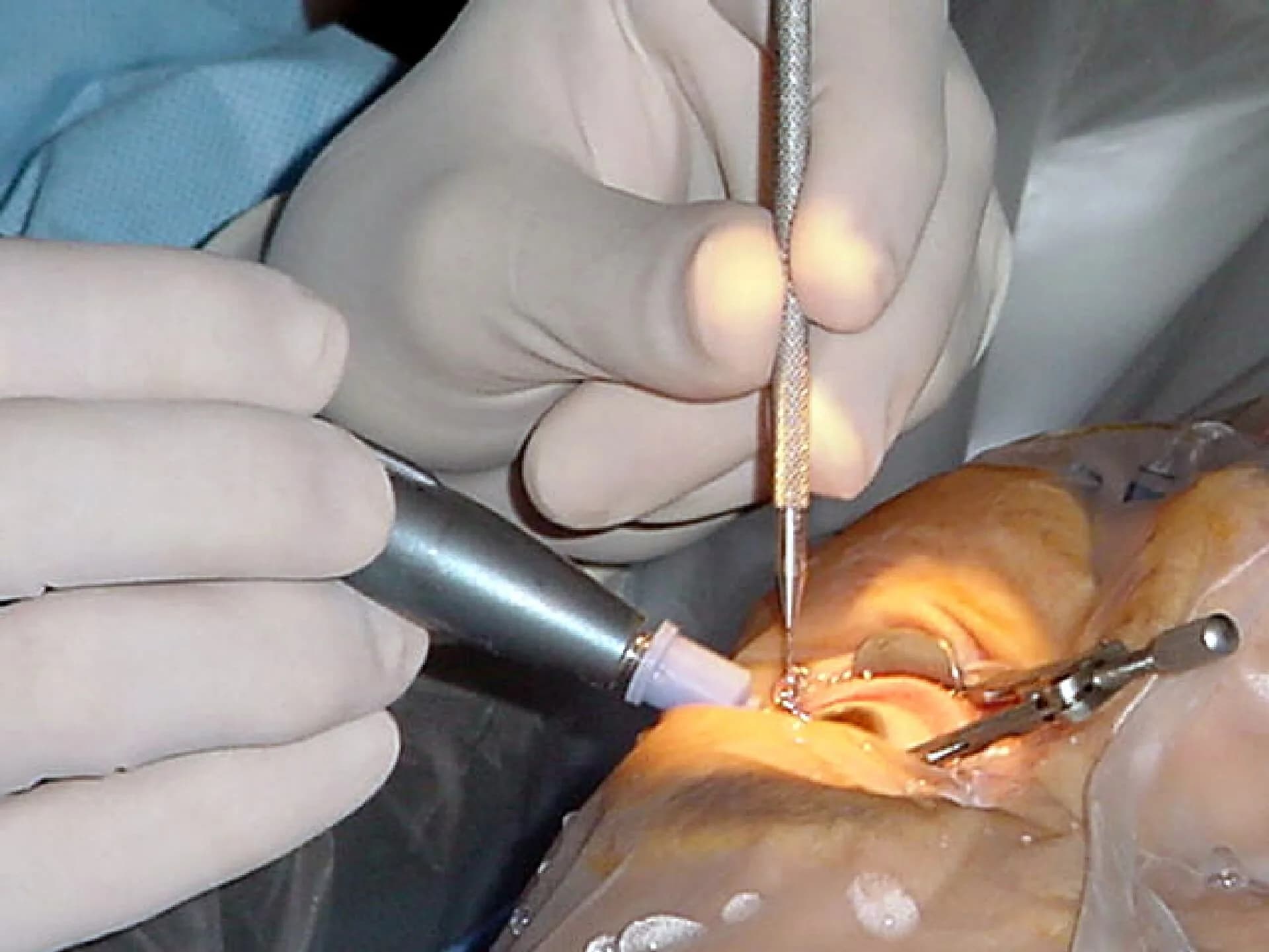
Most cataract patients ask what actually happens during surgery. The exact technique depends on the doctor's assessment, but phacoemulsification usually follows a small-incision lens replacement process.
The surgeon creates a small opening to reach the cloudy natural lens while protecting the surrounding eye structures.
Ultrasound energy breaks the cloudy lens into tiny fragments, which are then removed gently from the eye.
After the cataract is removed, an intraocular lens is placed according to the measurements and lens plan discussed before surgery.
Recovery guidance is part of the treatment plan. Patients should follow the prescribed eye drops and review schedule, and contact the centre if warning symptoms appear.
Patients receive instructions for prescribed drops, hand hygiene, eye protection, and avoiding rubbing or pressure on the operated eye.
The doctor explains when normal activities can resume and which activities should be avoided during early healing.
Increasing pain, sudden vision drop, marked redness, injury, or discharge should be reported promptly instead of waiting for the next routine visit.
These pages help patients understand the full cataract care journey, from treatment selection to surgery details and paperwork support.
Learn how phaco surgery is planned, how the cloudy lens is removed, and what follow-up usually involves.
Learn moreReview cataract surgery planning, lens counselling, and post-operative care in more detail.
Learn moreCheck what to ask before visiting if TPA insurance or Ayushman Bharat PM-JAY support may be needed.
Learn morePatients with diabetes may need retina evaluation before or after cataract planning, depending on clinical findings.
Learn moreThese answers are general guidance. The doctor can give personalised advice only after examining the eye and reviewing the patient's health and visual needs.
Not always. Surgery timing depends on cataract severity, symptoms, visual needs, eye health, and whether daily activities are affected.
Eye drops may support comfort for other eye concerns, but they do not remove a cataract. The doctor explains realistic options after evaluation.
Lens selection is based on eye measurements, cataract plan, cornea and retina health, astigmatism, daily needs, and counselling about expectations.
Some patients may still need glasses for reading, distance, or fine work depending on the IOL selected, eye health, and visual expectations.
Selected government and public-health resources for patient education and scheme reference.
These resources are for general guidance; treatment decisions are made after clinical evaluation.
Quick answers for patients planning a consultation, eye check-up, or surgery visit.