

Dilated retina check
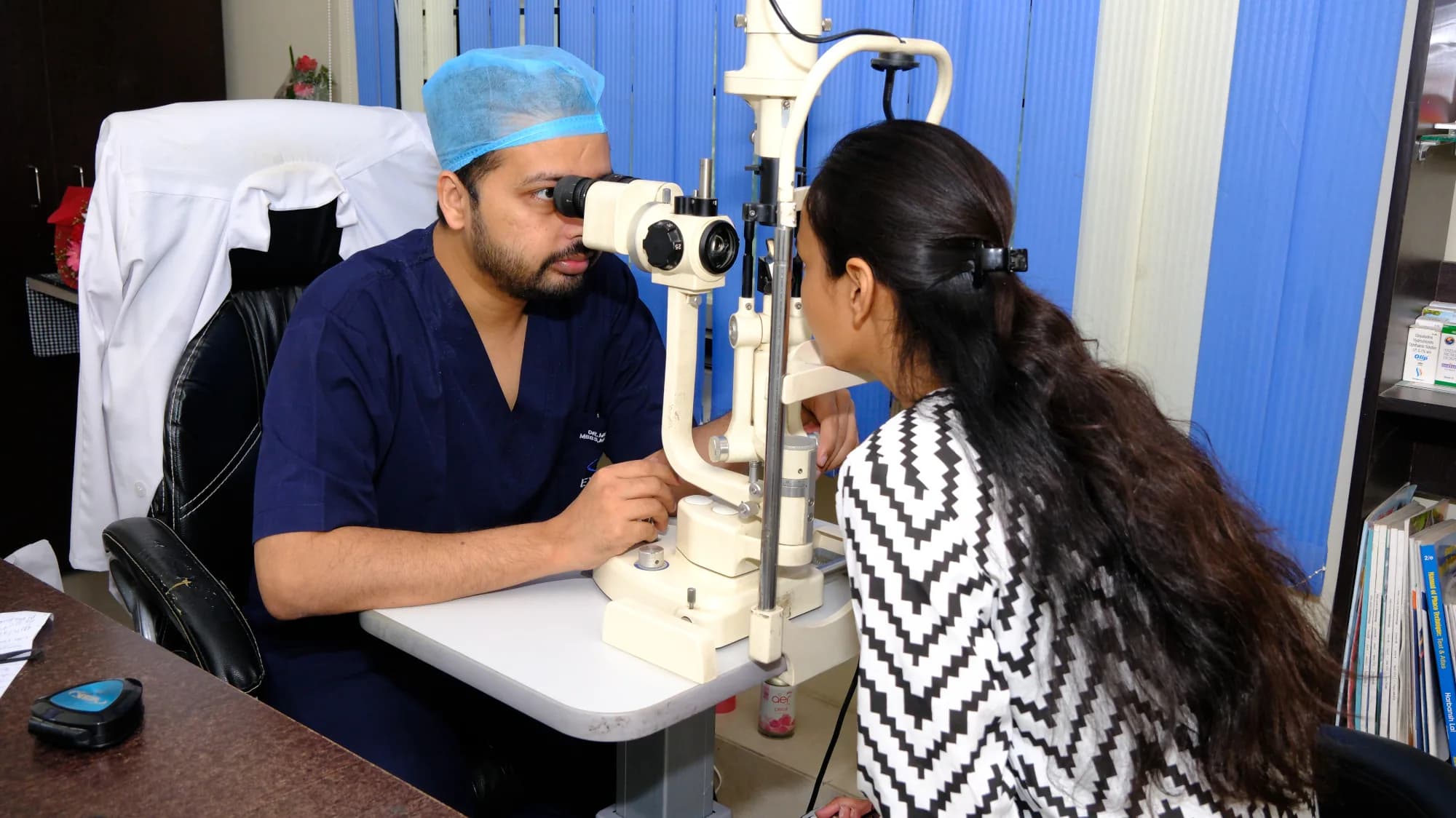
A detailed retina examination helps look for diabetes-related bleeding, swelling, deposits, and macular involvement.
At Eye First in Aliganj, Lucknow, diabetic eye care focuses on checking the retina early, explaining diabetes-related eye risk, and planning follow-up before vision is seriously affected.
Diabetes can damage small blood vessels in the retina, the light-sensitive layer at the back of the eye. These changes may begin quietly, so waiting for major vision loss can delay diagnosis and treatment.
Eye First Superspeciality Eye Care is an eye care centre in Lucknow where patients with diabetes can receive retina-focused evaluation, counselling, and review planning. The doctor checks whether diabetes has caused bleeding, swelling, macular changes, or other retina findings that need monitoring or treatment discussion.
The aim is to make the next step clear: routine follow-up, tighter monitoring, additional diagnostics, retina treatment planning, or coordination with the patient's physician or diabetologist for better systemic control.
A detailed retina examination helps look for diabetes-related bleeding, swelling, deposits, and macular involvement.
Follow-up timing is guided by retina findings, diabetes duration, sugar control, pregnancy status, and existing eye history.
If changes are found, patients are guided on monitoring, laser, injections, referral, or surgery planning when clinically needed.
A diabetic eye check is useful even when vision seems normal. Patients should not wait for severe blur before asking about retina screening.
A baseline eye evaluation helps document retina health and gives the patient a clear review plan for future monitoring.
Patients living with diabetes for several years may need closer retina monitoring, especially if sugar levels have fluctuated.
Blur, distortion, floaters, patchy vision, or difficulty reading should be checked promptly because the macula or retina may be involved.
Diabetic eye care in Lucknow should combine vision testing, clinical retina examination, and additional diagnostics when the doctor needs more detail.
The visit may include visual acuity, refraction context, eye pressure, and front-of-eye examination before retina assessment.
After dilation when advised, the retina is examined for diabetic retinopathy, bleeding, swelling, deposits, and vessel changes.
OCT may be advised when central retinal swelling, macular changes, or detailed monitoring is needed.
Not every diabetic retina finding needs the same treatment. The plan depends on severity, macular involvement, vision, systemic control, and follow-up reliability.
Early or mild findings may be monitored with review dates, warning signs, and advice to maintain diabetes, blood pressure, and lipid control.
Laser care or eye injections may be discussed when retinal swelling, new vessels, or more active disease is found.
Patients who need advanced retina treatment can review the broader retina care pathway and related diagnostic support.
Some symptoms should be treated as priority appointments. Early contact helps the team decide whether a same-day or early retina review is needed.
New floaters, cobwebs, or a dark haze can occur with vitreous bleeding or retina changes and should be checked quickly.
Wavy lines, central blur, or difficulty reading may suggest macular swelling or another retina concern.
A curtain-like shadow, sudden loss of vision, or new flashes needs prompt retina evaluation.
These pages help patients understand related eye concerns that commonly overlap with diabetes and retina monitoring.
Learn about diabetic retinopathy, macular concerns, laser care, injections, and retina follow-up at Eye First.
Learn morePatients with diabetes may need cataract and retina status reviewed together before surgery planning.
Learn moreReview urgent retina symptoms, retinal detachment concerns, and surgery-related counselling.
Learn moreAsk about TPA insurance or Ayushman Bharat PM-JAY document guidance before planned procedures.
Learn moreThese answers are general guidance. A personalised plan depends on examination findings, diabetes history, and the doctor's advice.
Yes. Diabetic retinopathy can start before obvious symptoms, which is why retina checks are important even when vision feels stable.
Review timing depends on retina findings, diabetes duration, sugar control, pregnancy, kidney disease, and previous treatment history.
No. OCT is advised when the doctor needs detailed macular information or wants to monitor swelling and treatment response.
No. Retina treatment and diabetes control work together. Patients should continue care with their physician or diabetologist.
Selected government and public-health resources for patient education and scheme reference.
These resources are for general guidance; treatment decisions are made after clinical evaluation.
Quick answers for patients planning a consultation, eye check-up, or surgery visit.